

Why salary sacrifice now belongs in the boardroom, not just the HR Team
- SalSac

- Jun 22
- 2 min read
Salary sacrifice has traditionally been seen as an employee benefit: something owned by HR, used to improve reward packages, and often discussed in the context of recruitment, retention and employee wellbeing. But that view is changing.
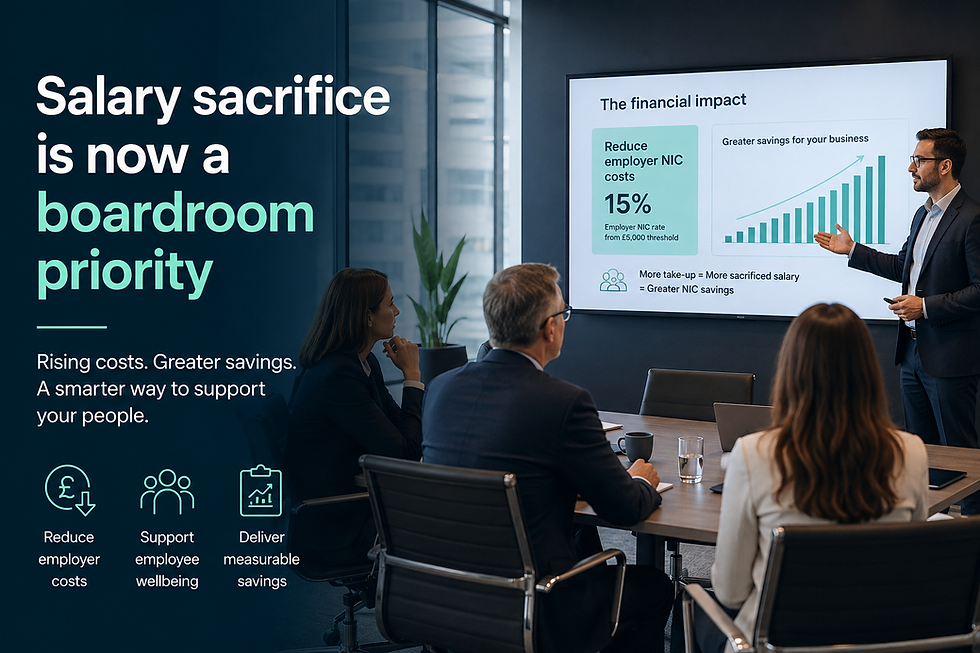
In a recent HR News article, “Why salary sacrifice has moved from HR ‘nice-to-have’ to boardroom priority”, Matthew Walters, Head of Consultancy at Ayvens UK, argues that salary sacrifice has moved from an HR “nice-to-have” to a boardroom priority. The reason is simple: rising employment costs are forcing businesses to look again at every part of their cost base.
With employer National Insurance Contributions now sitting at 15% from a £5,000 threshold, salary sacrifice is no longer just about giving employees access to valuable benefits. It is also a practical way for employers to reduce payroll-related costs.
That shift matters.
For finance teams, salary sacrifice creates a direct commercial opportunity. Every pound an employee sacrifices can reduce employer NIC liability, meaning the business can support employees while also creating measurable savings. In a climate where cost management is high on the agenda, that makes salary sacrifice far more than a reward initiative.
For HR teams, this creates an opportunity to reframe the conversation internally. Instead of asking the board to approve another benefit, HR can present salary sacrifice as a cost-saving mechanism that also improves the employee proposition. That combination is powerful: the employer reduces costs, while employees gain access to benefits in a more tax-efficient way.
The key is visibility. Many businesses already have the data they need to understand the opportunity. Payroll costs, employer NIC contributions and workforce salary information can all be used to model the potential savings of a salary sacrifice scheme. Once those numbers are clear, the conversation becomes much easier for both HR and finance.
At SalSac, we believe this is where salary sacrifice leasing is heading. It is no longer enough to treat it as a perk buried in the benefits platform. Employers need to understand the financial impact, the employee value, and the role salary sacrifice can play in a broader cost-management strategy.
The organisations that act now will be better placed to protect their people proposition while managing rising employment costs. In that sense, salary sacrifice is not just an HR benefit anymore. It is a boardroom conversation.


